

Gone are the days when businesses used paper-based systems to manage their operations. In today’s era of cut-throat online competition, investing in custom software development has become vital as it not only tailors solutions but also enhances scalability and long-term growth. Many business owners make the mistake of using off-the-shelf software solutions as a budget-friendly option. However, what they fail to realize is the fact that these off-the-shelf software solutions lack the customization needed to meet unique demands. In fact, according to Grand View Research, the custom software development market is expected to grow at a rate of 22.6% CAGR from 2025 to 2030, highlighting how vital and widespread it has become across industries.
Considering the fact that there are a plethora of custom software development tools, businesses can now easily streamline the development process and reduce time-to-market while fully customizing it. Whether you are aiming to streamline internal processes, address operational challenges, gain better control over your data, or implement custom dashboards and reporting features, custom software development offers the flexibility to meet your exclusive requirements.
Key Insights
- Custom software is built from scratch by a dedicated development team and can accurately meet business needs and industry regulations.
- Unlike off-the-shelf software that is not flexible to specific workflows or needs, custom software offers robust security and is highly versatile.
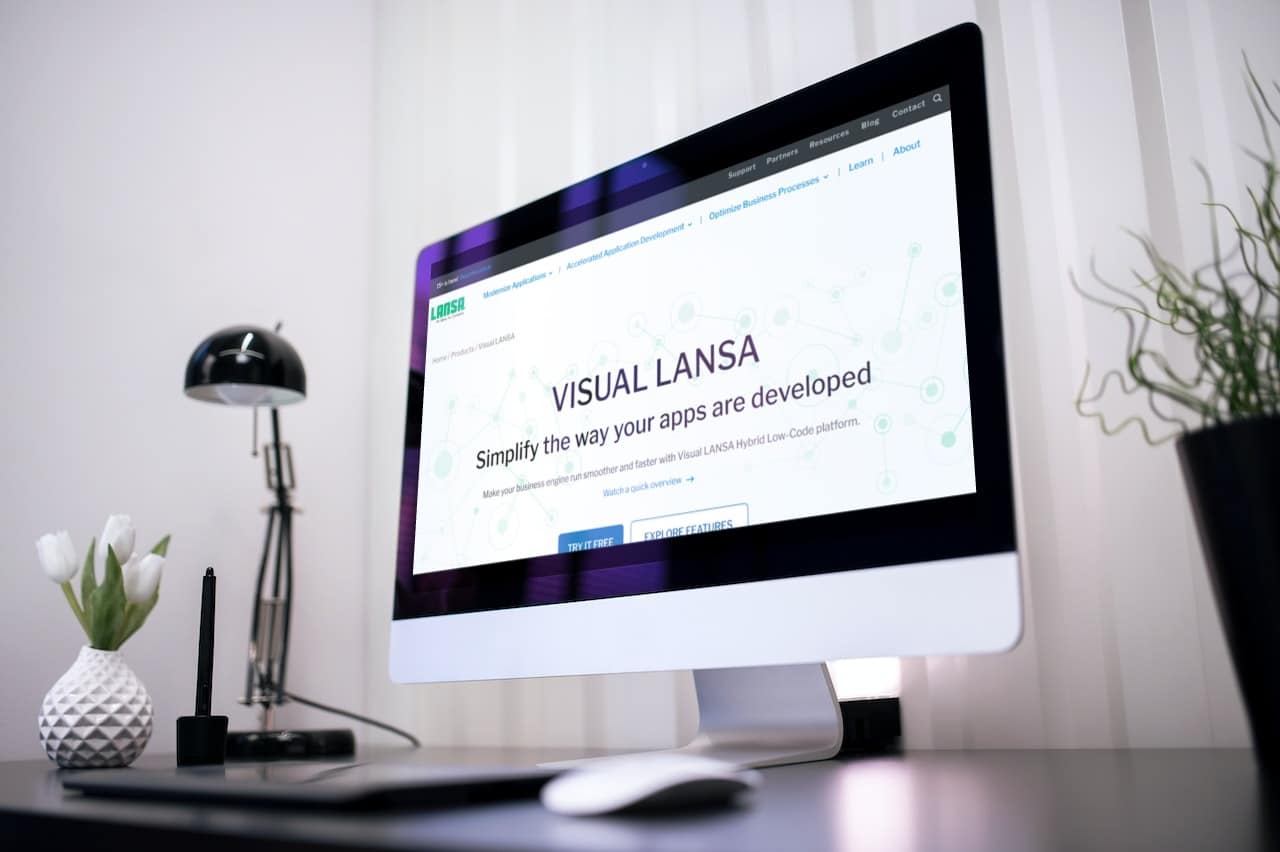
- In recent days, low-code platforms like Visual LANSA have gained popularity for being cost-efficient while allowing businesses to customize their applications, making it an ideal choice.
- Custom software development offers various benefits like complete data control, full ownership of software, ongoing support and maintenance, and airtight security that safeguards important data.
What is Custom Software Development?
Custom software development is the process of designing, developing, and deploying software for the particular needs of businesses or individuals. Not to mention, with the advent of a low-code platform like Visual LANSA, custom software development has become more accessible and cost-effective, allowing businesses to rapidly build tailored solutions without the need for extensive coding expertise. Being highly tailored solutions, custom software can also seamlessly integrate into existing workflows, easily adapt to evolving needs, and offer a competitive advantage over competitors.
To explore the capabilities of Visual LANSA, watch our webinar: Introduction to Visual LANSA: Professional Low-code for IBM i Developers.
Custom Software vs. Off-the-Shelf Software
When deciding between custom software and off-the-shelf software, it is important to be informed of their differences and advantages. While commercial off-the-shelf software might propose lower upfront costs, it is a fairly generic solution that limits the ability to stand out. It is not entirely flexible to adapt to specific workflows or future scalability requirements, often forcing businesses to adjust their processes to fit the software rather than the other way around.
On the other hand, custom software offers complete versatility and aligns perfectly with the long-term goals of businesses. Although it may seem that the software development estimation is high, it is cost-effective in the long run. These solutions are created with robust security protocols, making them highly secure for businesses in sensitive industries to protect confidential data and safeguard against potential cyber threats.
As custom software continues to evolve, the advent of low-code platforms has revolutionized the way businesses build and deploy their solutions, offering faster and more accessible development options. Tools like Visual LANSA provide an ideal alternative by enabling businesses to build fully customized applications at a fraction of the cost and time. Here is a table that further demonstrates the differences between custom software application development and off-the-shelf software.
Learn how to Building Modern Business Applications with Visual LANSA by watching our webinar.
Benefits of Custom Software Development
By developing custom software, you not only get a product designed around your business objectives but also the advantage of long-term adaptability and ongoing updates as your needs evolve. Read on to find out some of the major benefits that custom software application development offers:
Complete Data Control
Unlike out-of-the-box software that offers a one-size-fits-all approach to data management, custom software development offers superior data control with private cloud storage, secure hosting providers, cybersecurity protocols, and robust encryption.
Ongoing Support and Maintenance
In addition to letting you be flexible with your updates, opting for custom software development also allows you to keep your software aligned with the latest trends and innovations. With a dedicated team behind your custom software development, you do not need to wait for support and can receive timely assistance to address bugs, vulnerabilities, and other evolving requirements quickly.
Visual LANSA can reduce application maintenance costs by as much as 80% with its centralized, active repository. The repository’s cross-referencing capabilities allow developers to quickly identify where specific components are used. By generating and storing detailed impact lists for precise and efficient updates, the need for extensive rework during updates is also greatly reduced.
As a result, the entire change implementation process becomes more efficient and reliable, significantly lowering maintenance efforts and freeing teams to focus on building new functionalities.
Pre-planned Updates
Off-the-shelf vendors push updates on their software, causing businesses to face sudden downtime. With custom software development, updates can occur based on your timeline, with plenty of pre-planning and testing that ensures minimal disruption of operations.
Compliance with Industry Regulations
Custom software application development allows you to build compliance into your system from the ground up. Whether it is GDPR for data privacy, HIPAA for healthcare, or PCI DSS for payment security, tailored solutions ensure you meet industry-specific regulations while minimizing legal and operational risks.
Cost Effectiveness
Custom software development offers long-term cost efficiency by focusing specifically on the features your business actually needs. Unlike off-the-shelf software that often comes with recurring licensing fees, custom solutions eliminate unnecessary expenses. Here is a infographic that depicts how custom software development helps in saving money while delivering better value over time.
Automation
From data entry and inventory management to reporting and customer notifications, automation reduces the need for manual intervention and streamlines operations. Through custom software development, you can build tailored software that automates repetitive tasks and ensures seamless integration with existing tools and systems.
Visual LANSA supports automation by providing a drag-and-drop interface and visual development tools that make it easy to design and implement automated processes. Developers can effortlessly integrate business logic and connect to backend systems with minimal coding effort, which accelerates the deployment of automation solutions and ensures consistent execution across business operations.
Personalization
It goes without saying that custom software is designed to match your unique business processes and goals in mind. Unlike generic solutions, it offers a personalized experience that aligns perfectly with how your team works and leads to higher user adoption, better performance, and software that evolves with your business needs over time.
Custom Software Use Cases
Whether you are a large enterprise looking to streamline operations or a growing startup seeking a tailored system, custom software development serves a wide range of industries and businesses. Here are some examples of the use cases of custom software application development:
Financial Management Systems
In finance, where data sensitivity and compliance are non-negotiable, custom software development plays a pivotal role. Financial institutions often require tailored solutions that support secure transactions, industry regulations, and compliance, and advanced risk assessment tools.
Enterprise Resource Planning (ERP) Platforms
Off-the-shelf software often misses the mark in creating ERP platforms that help organizations streamline their core business operations. On the other hand, custom ERPs can integrate modules like inventory, HR, and finance into a single, seamless system that aligns perfectly with internal operations.
Manufacturing Organizations
Complex supply chains, production lines, and large inventories make manufacturing one of the most demanding sectors. Custom software development can be purpose-built to integrate seamlessly with every stage of the production lifecycle, enhancing productivity and operational efficiency.
Healthcare Systems
When it comes to the healthcare industry, the data handled is highly sensitive, requiring businesses to develop custom software, as off-the-shelf solutions may not provide the level of security required to protect patient information adequately.
From PWAs and mobile apps to ERP systems, Visual LANSA enables the development of a wide range of fully customizable applications. By allowing developers to embed HTML directly into their applications, offering dynamic theme options, and enabling customization to pre-built components, Visual Lansa helps in fully tailoring the applications to specific needs, leading to organizations worldwide leveraging it.
For example, Duskin Cleaning Services, a franchise business in Japan sought the help of LANSA for streamlining their inventory management with a mobile app. Likewise, CBH Group, Australia’s largest grain co-operative, optimized its grain supply chain operations with LANSA’s development environment that allowed it to create both rich Windows and web applications.
How to Decide if Your Enterprise Needs Custom Software Solutions
More often than not, businesses find themselves caught in the dilemma of whether to build custom software from scratch or buy an off-the-shelf solution. In order to find the right choice between the two, you need to ask yourself several important questions. Below, you can find some of the most important questions to help you decide if your enterprise needs software engineering:
Do you have unique business needs?
If your operations or service models do not fit into the standard functionalities of off-the-shelf software, custom software development provides the flexibility to build solutions around your specific processes.
For example, Civadis, an IT Solutions provider, wanted to develop and maintain custom software solutions for civil administration and welfare centers across Belgium. In order to fulfill their unique business need, they turned to LANSA to build highly customized systems that manage key functions such as public records, social welfare, housing, accounting, and more.
By using Visual LANSA, Civadis was able to enhance existing RPG applications, implement new features faster, ensure consistent user interfaces, and generate error-free code, resulting in lower support costs, improved data integrity, and faster compliance with changing legislation.
Are you looking for a temporary solution or a long-term investment?
If you are focusing on building sustainable and scalable software that can adapt to your future needs, then custom software development is a smarter investment. Unlike off-the-shelf solutions, which may become limiting over time, custom-built platforms are designed to evolve alongside your business, allowing you to achieve better long-term growth.
Is data protection paramount in your sector?
When it comes to industries such as finance and healthcare, highly sensitive information is being handled, and compliance with regulations and advanced data security is non-negotiable. With commercially available solutions where data ownership is with the software vendor, it would be difficult to implement advanced security measures and legal requirements.
Are you trying to stand out from your competitors in a highly saturated market?
Most SMBs and enterprises rely on custom software development to differentiate from their competitors by introducing unique functionalities like AI-powered features and predictive analytics that off-the-shelf solutions are not competent enough to do.
Best Practices for Developing Custom Software
When it comes to developing custom software, there are a number of factors that you need to take into consideration. From choosing the right development approach and technology stack to thorough testing and quality assurance, understanding software development metrics and practices will not only help in managing risks but also improve software quality. Here are some of the best practices to adhere to when you develop custom software.
DRY Principle
The DRY Principle, an acronym for “Don’t Repeat Yourself” emphasizes staying clear of duplicating code and maintaining a clean codebase, which will lead to a minimized occurrence of bugs and inconsistencies.
Staging and Production Environments
Having distinct staging and production environments will ensure that new features or updates are tested in a safe and simulated environment. Not only does it help in identifying bugs early in the custom software development cycle, but it also prevents potential data loss and minimizes emergency fixes post-deployment.
Always Design Before Coding
Designing before front-end and back-end development is a smart upfront investment that ensures the software’s architecture, data flows, and user interface align with business requirements and technical aspects.
Ensure Proper Version Control
When you are working with a team of developers, it is important to use version control systems like Git for teams to collaborate and track the changes they have made. It will ensure that each change is recorded, making it easy to revert to earlier versions and avoid code conflicts between developers.
Conclusion
There’s no denying the fact that custom software development provides a strategic advantage by offering solutions that are uniquely tailored to your business processes and long-term goals. Whether you are a startup aiming for scalability or an enterprise navigating complex workflows, investing in bespoke software development can unlock greater operational efficiency for your business.
Not to mention, low-code platforms like Visual LANSA make this process even more accessible by offering the power of customization without the complexities of custom coding. If you want to know more about building bespoke software like b2b e-commerce platforms, get in touch with us for a personalized demo and see the platform in action!
References
[1] “Custom Software Development Market Size Report, 2030,” www.grandviewresearch.com. https://www.grandviewresearch.com/industry-analysis/custom-software-development-market-report